The financial tools every big ranch has.
Now built for yours.
The financial package your lender already wants. Built on FFSC standards, generated from the books you already keep.
See a sample report→See a sample answer→Financial intelligence software. RangehandIQ is not a registered investment advisor, broker-dealer, CPA, attorney, or lender, and does not provide investment, accounting, tax, legal, lending, credit, securities, or commodity/futures advice or recommendations.
Most ranches don’t have someone watching the numbers month-to-month. They have a CPA who shows up at tax time, a banker who needs your numbers before renewal, and a spreadsheet that doesn’t know a heifer from a steer.
The Cost Blind Spot
Most operators know their total expenses but can’t tell you what it actually costs to raise each calf. Without that number, every management decision is, at best, an educated guess.
The Bank Meeting
Every renewal season, ranchers walk in with a tax return and a handshake. A professionally documented financial package — balance sheet, cash flow, key ratios — changes the conversation.
The Succession Gap
The average Intermountain West rancher is in their sixties. Water rights, grazing schedules, vendor relationships, permit history — it lives in one person’s head.
The Federal Land Layer
BLM and Forest Service grazing allotments require specific tracking, documentation, and reporting that no general business tool understands. This is not Iowa row crops.
“If it can’t fit on the back of an envelope, it’s too much. RangehandIQ gives you the envelope — with the math already done.”
Ask your books a question.
Back-of-envelope clarity. Without the envelope.
Fluent in cattle and the numbers behind them. Ask in plain English. Get the math back with the answer — before the banker asks first.
“Where do we actually stand heading into renewal?”
“If calf prices drop 10% this year, what happens?”
“If I expand by 100 head this fall, what happens to my numbers?”
From your books, through a conversation, to your banker.
What you already have.
QuickBooks exports, bank statements, last year’s tax return, the red book in your pocket. You bring the books you already keep — we read from your exports, not a second accounting system.
Ask the questions worth asking.
DSCR. Cost-per-cow. Should you keep the heifers or sell them. The math your banker is going to walk through anyway — only now you’ve already seen the answer.
Walk in prepared.
Renewal time. You sit down with your banker holding the same package the big operations bring. The conversation changes.
Six tools. One place.
Ask Your Books a Question.
Fluent in cattle. Connected to your numbers. Plain-English answers with the math attached — DSCR, working capital, breakeven, what-if. Before your banker asks.
“If it doesn’t pencil on the back of an envelope, it’s not gonna work — the unseen stuff wipes out the margin.”
Lender-Ready Export — One Button.
Balance sheet, cash flow, key ratios. Built on FFSC standards. The same package big operations hand their banker — ready before your renewal.
Know Your Cost Per Cow.
Your fully-loaded cost to run a cow — book costs plus your own labor and land — so you know your true cost of production, not just total expenses.
Spouse / Bookkeeper Access.
Role-based access. The bookkeeper enters numbers without seeing loan covenants. The operator reads the package without entering receipts.
“He’s got the cow numbers… and then I pay the bills.”
Next-Gen Track Record.
FSA eligibility, loan history, clean books that build year over year — packaged for the day your kid walks into a lender’s office.
Succession — On Your Terms.
Water rights, grazing schedules, vendor relationships, permits. The records your kids inherit, documented at your pace — not under duress.
“Sometimes it is better to pay tax and have your family stay together.”
The numbers your banker reads first.
Four ratios on FFSC standards, scored against Intermountain West lender benchmarks. Red, yellow, or green — before the meeting, not after.
Thresholds per Intermountain West lender benchmarks. Generated from the books you already keep — balance sheet, cash flow, and full ratio analysis on FFSC standards.
The report your lender already recognizes.
Balance sheet, cash-flow statement, key ratios — built on FFSC standards and traceable to every entry. The same package the big operations hand their banker, on one button.
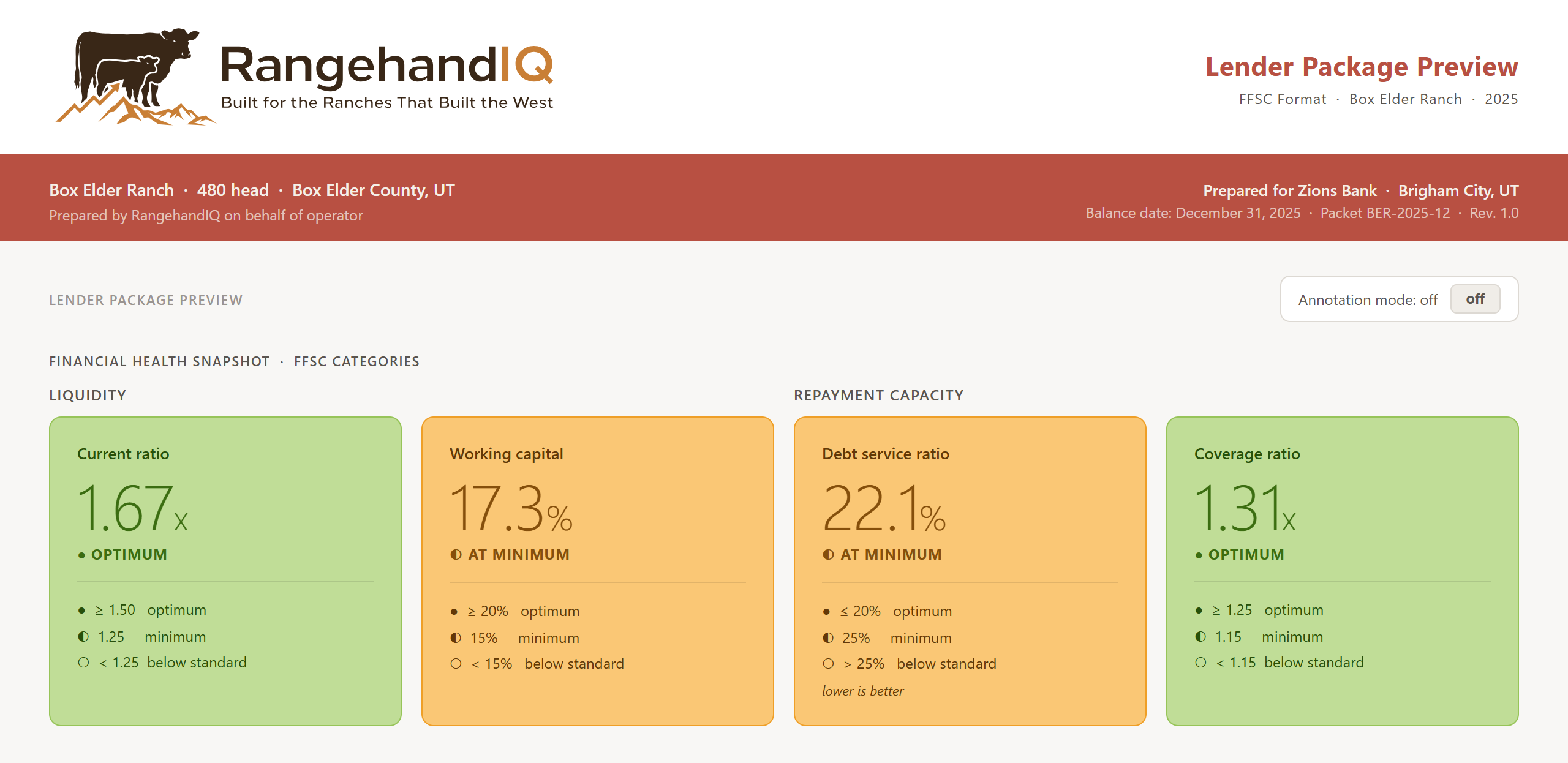
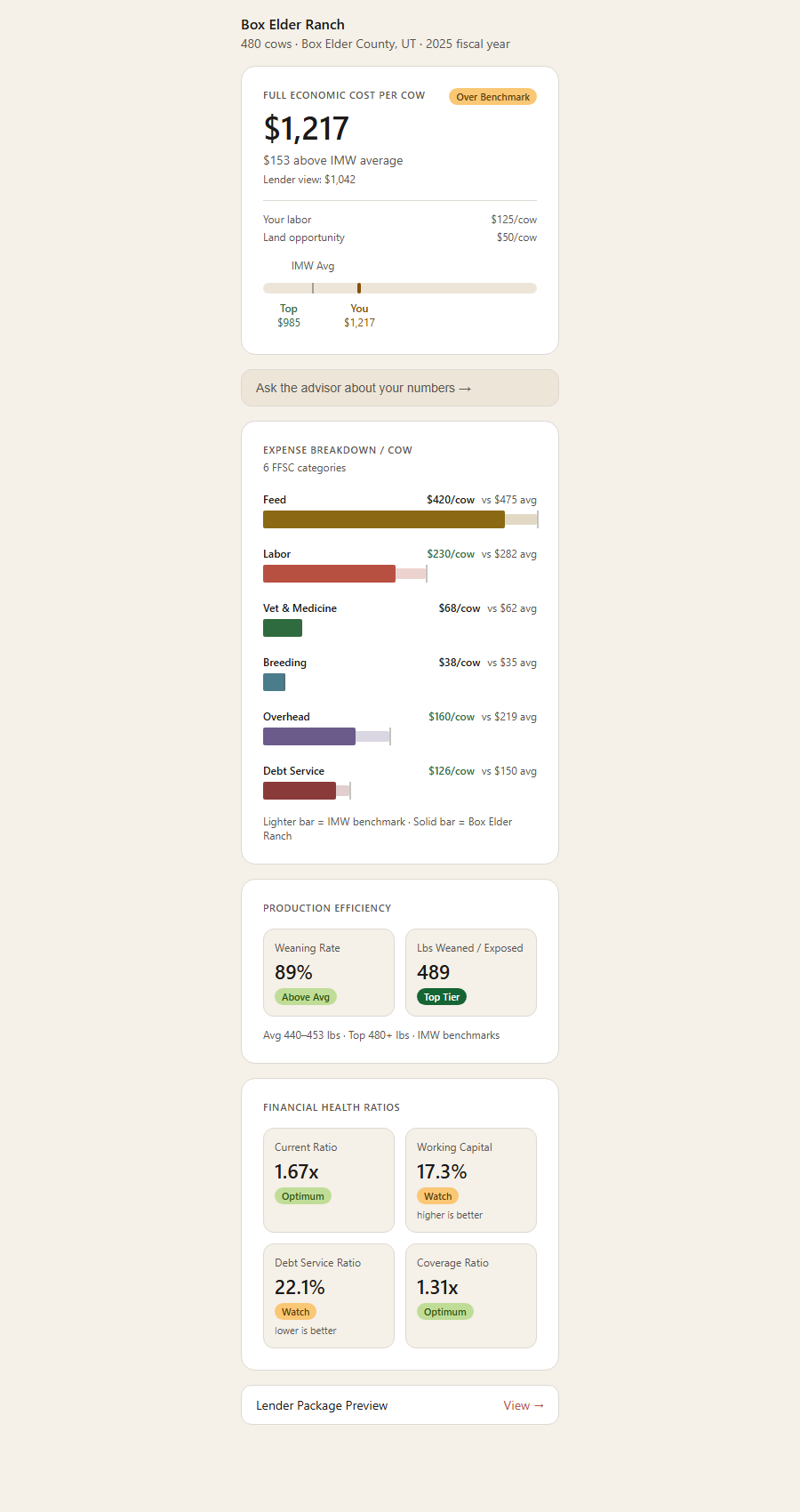
Financial health snapshot · balance sheet · cash flow · debt service and coverage ratios · your fully-loaded cost per cow. One PDF. Every number traceable.
Six real people. One tool.

The Senior Operator
Three generations in. The operation lives in his head and his red book — every gate, every grazing rotation, every handshake. He doesn’t need a new system. He needs his knowledge written down before he hands the reins over.
The Next-Gen Operator
Wants the records to back up the handshake — the clean books a lender expects, built before the first solo meeting. Tech-fluent, but not interested in tools that talk down to his father.
The Spouse / Bookkeeper
In this household they’re the same person — his wife runs the books at the kitchen table after dinner, often the only one who knows where every receipt actually went. Needs the math, and a clean role boundary that means she doesn’t have to read the loan covenants she didn’t sign. (When the bookkeeper is a hired hand or an outside service, the same role boundary applies.)
The Next-Gen Spouse
Watching her siblings-in-law build documented equity while her family’s operation lives in a pocket notebook. Has the laptop and the patience her husband doesn’t. She finds the tool, sets it up, runs the first lender export — and presents it to him as already working.
The Ag Lender
Reads the package ahead of the renewal meeting. Doesn’t have time to be a forensic detective on handwritten receipts. When her borrower walks in with numbers on FFSC standards instead of a notebook from a shirt pocket, the renewal conversation stops being painful — for both sides of the desk.
The Red Book Operator
The day-to-day lives in the red book in his shirt pocket. The books on the computer exist mostly for the CPA in March. Two systems, no connection between them — and no plans to change that. Will accept a tool that reads from the books he already keeps and respects the notebook he already trusts.
We’re not here to sell you the future. We’re here to be useful before your renewal.
It won’t ask you to throw out the Red Book.
The notebook in your shirt pocket works. So does the way you already do envelope math in the truck. RangehandIQ is built to sit alongside what works — to take the numbers you already track and turn them into something a banker, a spouse, or the next generation can read at a glance.
It won’t replace QuickBooks.
If you already keep books, you export them and we read the file. We don’t ask you to enter every receipt twice. The operators we’ve spoken with are clear: a second accounting system is a non-starter. RangehandIQ sits on top of what you have and turns it into something a banker can read.
It won’t track every cow individually.
Ear-tag-by-ear-tag herd management is a different product, for a different operator. For commercial cow-calf at this scale, what matters is total ranch productivity — cost per cow, break-even per calf, days of feed on hand — not weighing every animal twice a year.
It won’t make the cattle market behave.
Knowing your cost-per-cow doesn’t move the futures price. What it does do: tell you, in October, whether you can afford to buy yearlings in March. That’s the difference between a decision and a hope.
It won’t replace your gut.
Thirty years on the ground taught you things no spreadsheet will. RangehandIQ doesn’t override that — it puts the numbers next to it. Ask a question, get the math, decide for yourself. The instinct is yours; we just run the figures behind it.
“Do I think it’s an uphill battle? Yes. But has every good idea had an uphill battle? Probably. That doesn’t mean it’s not worth pursuing.”
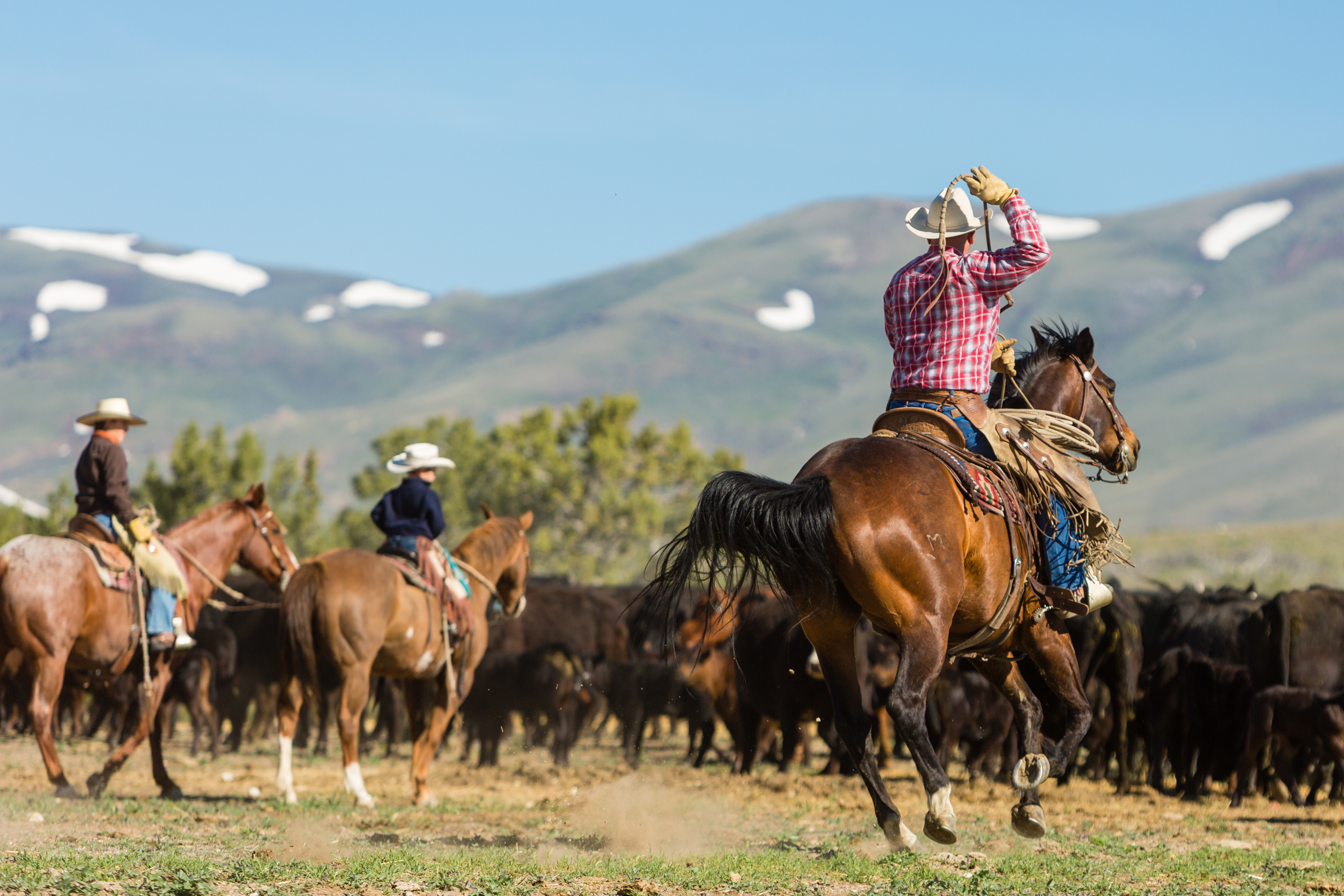
This is Intermountain West ranching — not Iowa row crops. The tools should know the difference.
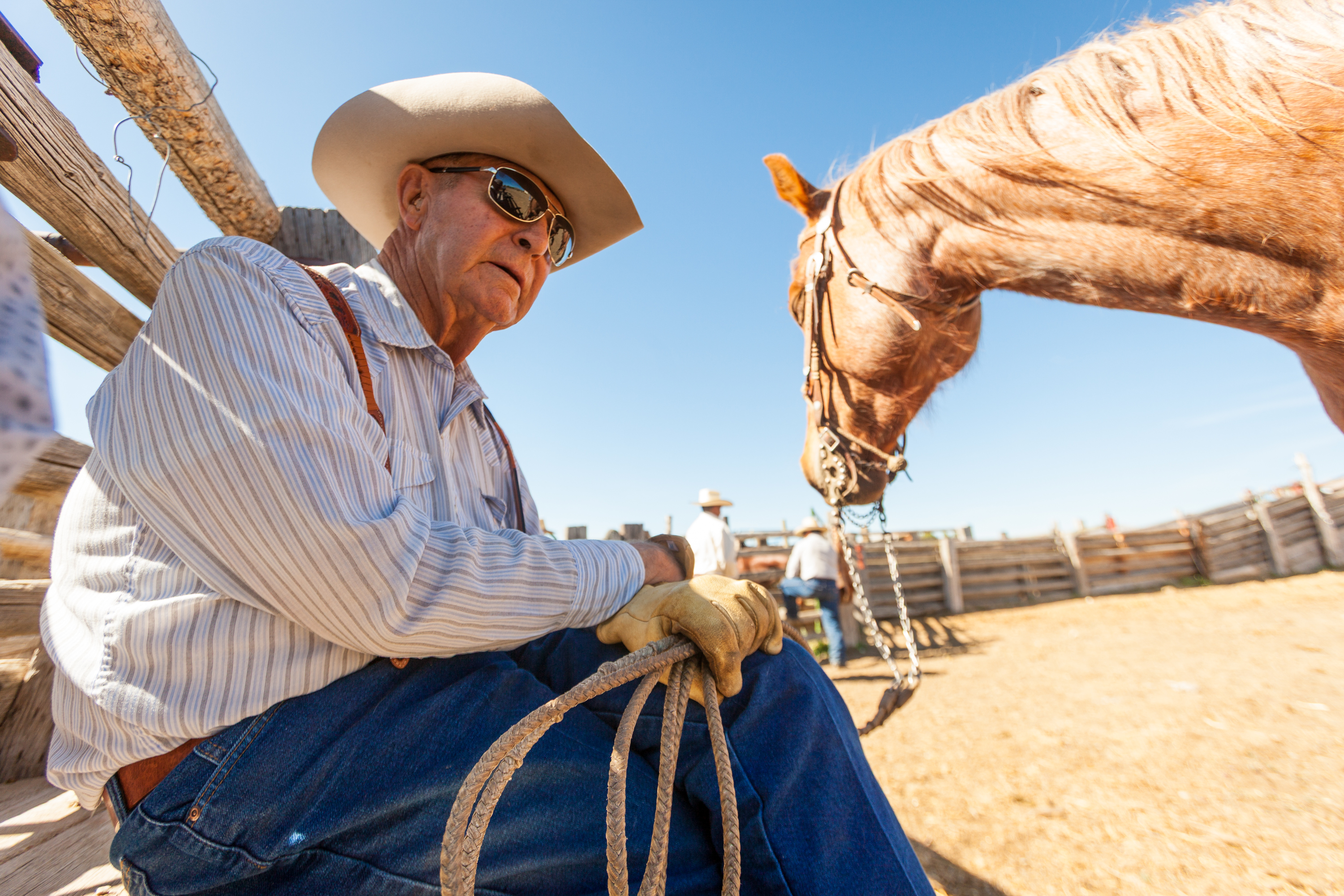
Gary Rose
Eight generations running cattle in this country. The work, the country, and the standard passed on through him, and those who came before.
This is built in his memory.
My dad spent 65 years as a rancher and agricultural lender. My family has run cattle in Park Valley, Utah for eight generations. From both sides of that desk, the same thing was true: most family ranches were running blind on the financial side — not for lack of work, but for lack of a tool that fit the way they actually operate. RangehandIQ is what I’m building to fix that.
Tell us where what you’re using now falls short.
Private beta is by invitation. We’re looking for operators in the Intermountain West — 250–1,000 head — willing to be honest about what doesn’t work today.
No spam. No sales calls. We’ll be in touch personally.